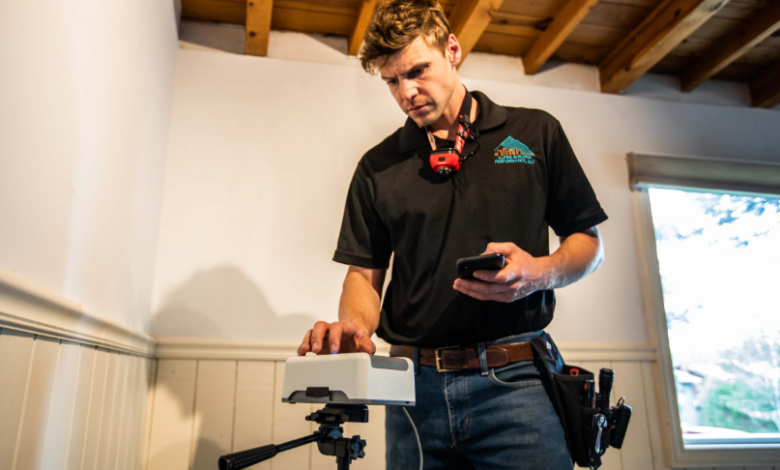
Real estate transactions can be complicated — and when a buyer asks for a radon test, it can add another layer of uncertainty for sellers. But that doesn’t mean it has to derail the sale. With proper planning, good communication, and use of certified professionals, a radon test request can be handled smoothly — and even turn into a selling point.
If you’re in Ottawa, where radon is a well-recognized concern — and living indoors year-round often means sealed homes that can trap soil gases — it’s especially important to know how to respond. This guide walks you through what to do when a buyer asks for a radon test: your obligations, recommended steps, communication & disclosure considerations, and how to prepare for possible outcomes.
Why Buyers Ask for a Radon Test — And Why It’s Important
Radon Is an Invisible Health Hazard
- Radon is a naturally occurring radioactive gas that seeps from soil and can accumulate indoors through cracks in the foundation, sump pits, gaps around utilities, or other soil-contact points.
- Because radon is colourless, odourless, and tasteless, the only way to know whether there’s a problem is through testing.
- Long-term exposure to elevated radon increases the risk of lung cancer.
Given this risk, many buyers view radon testing as critical — especially if they plan to live long-term in the home, have children, or hope to use a basement as living space.
Real Estate Risks Without Testing
If you as a seller don’t address radon testing when a buyer asks:
- The buyer may pressure for mitigation, lower the offer, or even walk away.
- Undisclosed radon risks can erode trust — potentially leading to renegotiations, delays, or liability concerns down the line.
- Even if your home is otherwise desirable, hidden radon issues can scare off safety-conscious buyers.
On the flip side: addressing radon upfront — with good testing and, if needed, mitigation — can be a selling feature. It signals transparency, responsibility, and a safe home environment.
What Kind of Radon Test Should You Use? Recommendations for Ottawa
Because environmental conditions and house-sealing patterns in Ottawa make radon more likely — and radon levels strongly affected by seasonal ventilation and occupancy — it’s important to do the test correctly.
Long-Term vs Short-Term Tests
- A long-term radon test (minimum 3 months) gives the most reliable estimate of a home’s average radon levels over time. This is the method recommended by Health Canada.
- Short-term or screening tests (2–7 days) may be useful initially — but because radon levels fluctuate daily and seasonally, they should not be used as the sole basis for mitigation decisions.
Recommendation for most real estate deals in Ottawa: opt for a long-term test if time allows (especially in heating season). If not feasible, use a short-term + contingency clause + long-term follow-up.
Use a Certified Professional — or at Least Follow Best Practices
- Radon test should be conducted by a qualified professional (certified) or using a high-quality test kit, placed and handled correctly. This ensures accuracy and credibility.
- Follow “closed-house conditions”: windows/doors shut, normal ventilation, no major renovation or disruptions — so test reflects typical living conditions.
Using a respected professional or lab-backed kit increases buyer confidence and reduces chances of disputes post-sale.
What to Do While the Test Is Running
Once you commit to a radon test, remember:
- Maintain “normal occupancy conditions” — don’t treat the house like a show-home (opening windows, running fans, leaving doors wide open) unless that’s how it’s lived in. This ensures accuracy.
- Document everything: record placement location, start date/time, any anomalies.
- Inform all parties (seller, buyer, agent) that nothing else should be modified (no renovations, no foundation changes) until test is over.
This helps ensure the result reflects realistic conditions and avoids disputes over “manipulated” low radon levels.
See also: The Quest for Personal Excellence: Exploring Self-Improvement Techniques Alongside
Interpreting Test Results — What They Mean & What to Do
When the test is done, you’ll get a radon concentration result expressed in Bq/m³ (or pCi/L). Here’s how to interpret and respond:
Understanding What’s “Safe”
- In Canada, the widely cited “action level” is 200 Bq/m³ — i.e., if radon is above that, mitigation is recommended.
- Because radon exposure is cumulative and there is no completely “safe” threshold, lower is always better — and many health experts treat radon mitigation as a worthwhile precaution, especially for long-term home occupants or families with children.
If Results Are Below Guideline
- Provide the report to the buyer along with a clear note — this is a strong selling point and demonstrates transparency.
- Offer to provide a copy (or even include a signed disclosure) as part of the sale documentation.
- Optional: suggest retesting every few years (or after major renovations). Many professionals recommend periodic radon checks to ensure levels remain safe over the life of the home.
If Results Exceed the Guideline
When radon is above 200 Bq/m³ (or your own risk threshold), consider:
- Offering mitigation before closing (with a professional system) — this can reassure the buyer and speed up the sale.
- Alternatively, agreeing on a hold-back or escrow fund, or price adjustment to cover mitigation costs.
- Providing multiple quotes from certified radon mitigation professionals to give buyer confidence and transparency.
- Setting expectations: mitigation is effective; a professionally installed sub-slab depressurization or other remediation usually reduces radon dramatically.
A buyer who sees that you’re addressing radon professionally is often more flexible — especially if you provide transparent documentation and reasonable options.
Disclosure, Transparency & Legal / Ethical Considerations
Even if not legally mandated in many jurisdictions (including many in Canada), disclosure of radon test results — and whether mitigation has been performed — builds trust and avoids potential liability.
- If you tested your home for radon, many real estate professionals recommend sharing results with the buyer, regardless of outcome. This openness can enhance buyer confidence.
- If mitigation is done, keep documentation: installation date, contractor name, system type — and pass these along. This helps future owners, inspectors, or insurance providers.
- Avoid “hiding” radon levels or offering only short-term/invalid test results. Because radon is a serious health risk and test results can affect long-term safety, transparency is the ethical choice — and also avoids potential disputes after sale.
In many real estate communities, properties with clear radon history and mitigation can command more trust — and often, smoother deals.
Practical Scenario: How to Handle a Radon Test Request in an Ottawa Sale — Step by Step
Here’s a sample step-by-step playbook a seller (or seller’s agent) can follow when a buyer requests a radon test:
Initial response — thank buyer, agree to test, clarify what kind of test (long-term, certified) and timeline.
Choose test method and provider — preferably a certified radon professional using long-term test kits or monitors. Get written agreement.
Prepare the house — inform occupants to treat the home as “closed house” for test duration; avoid major changes.
Run the test — ideally during heating season (when windows are mostly closed), for 90+ days. This gives the most representative result.
Collect and document results — get official lab report, take photos of device placement, record test conditions.
Share results with buyer — regardless of outcome, send them the full report and notes.
If radon is low (≤ 200 Bq/m³): consider highlighting “radon safe” status in sale materials.
If radon is high: get at least 2–3 quotes from certified mitigation professionals; negotiate with buyer about mitigation before closing or hold-back after sale.
If mitigation happens: after installation, perform a follow-up radon test to confirm reduction before finalizing sale documents.
Keep all records: test reports, mitigation invoices, system details — hand them off to the buyer as part of the disclosure package.
Benefits of Handling a Radon Request Properly — For Seller & Buyer
When you handle a radon request with transparency, diligence, and professionalism you can:
- Increase buyer confidence and reduce last-minute hesitation
- Turn radon mitigation into a selling feature — especially for health-conscious buyers
- Reduce liability and avoid future disputes
- Potentially close faster by removing a common buyer concern before it becomes a deal-breaker
- Add value to sale documentation — including proof of mitigation or radon-safe status
In markets like Ottawa, where radon awareness is rising, a proactive approach to radon can differentiate your listing.
Common Mistakes to Avoid — And How to Prevent Them
❗ Mistake: Relying on Short-Term Tests Alone
Short-term tests are easy, but they don’t reflect seasonal variation or long-term exposure. Using only a 2–7 day test can give false assurance — and later, radon levels may spike.
Fix: Use long-term testing or at least follow up a short-term screening with a 3+ month test. Ensure conditions reflect typical occupancy.
❗ Mistake: Hiring Unqualified Testers / DIY Kits with Poor Documentation
DIY kits or uncalibrated detectors placed incorrectly can produce unreliable results — potentially leading to disputes or re-testing requests from the buyer.
Fix: Hire certified radon measurement professionals or use approved, lab-based testing kits. Document placement, conditions, and ensure lab reports are provided.
❗ Mistake: Waiting Until “After Inspection” or “After Sale” to Test
If you postpone radon testing until after offers are made, you risk scaring off buyers or having to renegotiate when high radon shows up.
Fix: Consider testing before listing, or make radon test a contingency clause in the offer.
❗ Mistake: Trying to Hide or Understate High Radon Results
Concealing radon test results or providing partial info undermines trust — and could lead to legal, ethical, or reputational consequences.
Fix: Disclose test results honestly, provide full documentation, and propose mitigation solutions if needed.
Post-Sale Considerations: If Buyer Moves In Before Radon Confirmation
Sometimes, parties agree to test or mitigate after sale (with hold-back or contingency funds). In that case:
- Ensure a formal agreement specifying timeline for testing & mitigation
- Buyer should perform long-term test ASAP (ideally within first 3–6 months)
- If mitigation needed, use certified professionals, and provide buyer with full documentation
- Buyer or seller (whichever agreed) should keep detailed records — test results, mitigation specs, invoices
- New occupant should retest every few years, or after major renovation or foundation changes
Though not ideal, this path can work — provided transparency and documentation are prioritized.
Final Thoughts — Radon Test Requests Should Be Viewed as an Opportunity, Not a Burden
A buyer’s request for a radon test doesn’t have to derail a sale. On the contrary — handled well, it can become a demonstration of transparency, responsibility, and care for long-term health.
In Ottawa, where radon risk is real and many homes are susceptible, taking proactive, professional steps signals that you value safety and fairness — to your buyer, their family, and future occupants.
If you want help:
The team at OttawaRadon.pro is ready to provide certified radon testing, long-term monitoring, mitigation if needed, and full documentation to support real estate transactions.
Whether you’re selling now or preparing for the future — treating radon seriously today can save time, avoid headaches, and build trust with the buyer. Let me know if you’d like a draft seller disclosure form, a radon clause template for your sale contract, or a downloadable checklist you can give to your realtor.