Monograms flashed from belts, logos stretched across chests, and status was engineered to be seen before it was understood. Today, the most discerning wardrobes operate differently. They speak in lower tones. They rely less on branding and more on discernment, less on spectacle and more on substance. This is the essence of quiet luxury: an approach to dressing in which refinement is conveyed through cut, construction, and above all, fabric.
The real mark of distinction is not the name on the label but the quality of the cloth against the skin, the way a jacket moves when its wearer walks, the way a trouser holds its line after hours of wear, or the way a knit retains softness season after season. Fine fabrics do more than make garments look beautiful. They shape the entire experience of wearing them. They determine drape, thermal balance, resilience, and the subtle visual depth that separates the merely expensive from the genuinely exceptional.
Why Fabric Has Become the True Language of Luxury
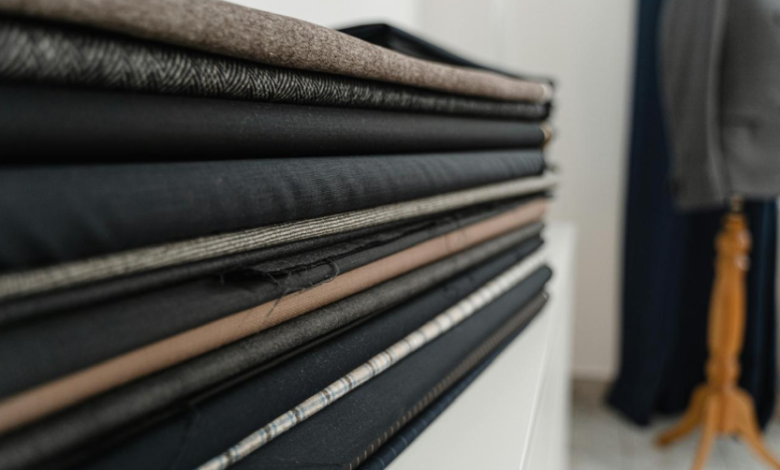
To understand contemporary men’s fashion at its highest level, one must start with textiles. A garment can have impeccable tailoring, a modern silhouette, and a desirable pedigree, but if the fabric is mediocre, its limitations reveal themselves quickly. The surface may look flat. The hand may feel lifeless. The fit may collapse after wear. By contrast, superior cloth has an intelligence to it. It responds to the body, carries color with more complexity, and ages with grace.
That is why the modern luxury wardrobe is increasingly built from the fiber up. Men who invest seriously in clothing are no longer buying only style; they are buying performance, comfort, and longevity. They are learning to read texture the way previous generations read logos. In doing so, they are moving toward a more mature understanding of fashion, one rooted not in trend cycles but in material culture.
Giza Cotton: Invisible Excellence
Among the most prized fibers in the world of shirting is Giza cotton, a material that embodies the logic of understated prestige. Grown in Egypt under highly specific climatic conditions, Giza cotton is celebrated for its extra-long staple fibers. That technical distinction matters because longer fibers can be spun into finer, smoother, and more durable yarns. The result is a fabric that feels crisp yet silky, structured yet breathable.
What sets Giza cotton apart is not simply softness, though it is unmistakably luxurious to the touch. Its real advantage lies in balance. A shirt made from superior Giza yarn can hold a sharp collar, maintain a polished surface, and still feel light against the body. It reflects light differently than ordinary cotton, producing a discreet sheen rather than a glossy finish. In practical terms, this means the garment looks cleaner, wears better, and often pills less over time when properly cared for.
This is exactly the kind of luxury that escapes the untrained eye but rewards the informed wearer. A white shirt in fine Giza cotton does not beg for attention. Instead, it offers a more compelling proposition: precision without noise.
Silk-Wool Blends: Controlled Fluidity
If cotton defines the architecture of refined shirting, then silk-wool blends often define the poetry of tailoring. Wool remains the backbone of men’s tailoring because of its elasticity, breathability, and natural resilience. Silk, by contrast, brings luster, fluidity, and a certain visual sensuality. When these two fibers are combined with skill, they create fabrics of extraordinary nuance.
A silk-wool jacket, for instance, behaves differently from one cut from pure wool. The silk softens the fabric’s structure and introduces a richer interaction with light, giving the surface dimension and quiet radiance. The wool anchors the blend, preserving shape and making the cloth more wearable in real life. What emerges is not flamboyance but depth: a blazer that moves with greater ease, catches the eye without shining, and feels more alive on the body.
This interplay of fibers explains why elite tailoring often appears effortless. The elegance is not only in the cut; it is in the cloth’s capacity to fall naturally, to skim rather than stiffen, to create movement instead of resisting it. Drape, in this context, is not an abstract aesthetic concept. It is the visible expression of textile quality.
Technical Fabrics and the New Frontier of Luxury
Quiet luxury is often associated with heritage materials, but that is only part of the story. Some of the most forward-looking expressions of men’s fashion now involve technical high-performance fabrics that merge textile engineering with elevated design. These materials are transforming outerwear, tailoring, knitwear, and even footwear by introducing properties that traditional fabrics cannot always deliver on their own.
A high-end technical textile may be water-resistant yet breathable, lightweight yet insulating, structured yet flexible. It may regulate temperature, resist creasing, or incorporate stretch without losing elegance. In the best cases, innovation is invisible. The garment does not look overtly futuristic. It simply performs better, feels better, and adapts more intelligently to modern life.
This matters because luxury today is increasingly measured by ease. Men want clothes that can move through a city, transition between climates, and maintain composure through long days of travel or work. That is why even the most refined wardrobes may include minimalist field jackets, softly tailored trousers, and sophisticated mens designer sneakers, crafted from premium materials. In such pieces, innovation is not at odds with elegance. It becomes part of it.
See also: How to Use GetRemovalistSydney for Fast and Easy Relocation
How Fine Fabrics Shape Drape, Comfort, and Longevity
The difference between an average garment and an exceptional one can often be explained through three criteria: drape, comfort, and longevity. All three begin with fiber selection and fabric construction.
Drape is the way a textile falls and moves. A superior fabric does not cling awkwardly or hang stiffly unless that effect is intentionally designed. Instead, it interacts with the body in a controlled, flattering way. This is why a finely woven wool trouser looks more elegant in motion, or why a premium overcoat seems to hold its silhouette without appearing rigid. Drape gives clothing presence.
Comfort is equally technical. Breathability, softness, weight, and thermal regulation all depend on the nature of the fibers and the quality of the weave or knit. A luxurious fabric should not only look refined under good lighting; it should also feel natural over hours of wear. The best materials create a kind of sensory ease that becomes difficult to forget once experienced. They do not distract the wearer. They support him.
Longevity, finally, is where true value reveals itself. High-quality textiles are often more stable, more resilient, and more graceful in the way they age. Their surfaces remain clearer, their structure more intact, and their hand more pleasing over time. This does not mean they are indestructible. Fine fabrics demand informed care. But when respected, they often outlast cheaper alternatives in both function and relevance.