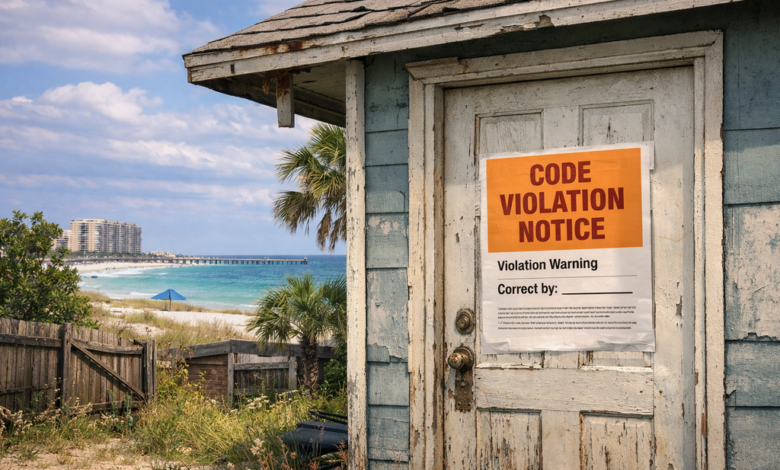
It often starts with a letter from the city.
Sometimes it is a notice taped to the front door. Other times it arrives by certified mail weeks after the property changed hands through probate. The language can feel formal and urgent: overgrown yard, unsafe structure, roof damage, debris, unpermitted work. Deadlines are listed. Fines are mentioned.
For many people who inherit property in Fort Walton Beach, FL, code violations are not the first thing on their mind. They are dealing with paperwork, family decisions, and the emotional weight of a home filled with belongings. Then the notices begin to arrive, and confusion sets in.
After working with many individuals navigating inherited property issues in Fort Walton Beach, one pattern is consistent: most did not realize that responsibility for code compliance transfers immediately to them. Even if they have never lived in the home. Even if they are still in probate. Even if the property has sat vacant for months.
Understanding how code violations work and what your options are can prevent small issues from becoming larger financial problems.
Why Code Violations Happen With Inherited Homes
In many cases, the property was not actively maintained in the months or years before the owner passed away.
Common causes include:
- Deferred maintenance due to age or illness
- Vacant homes attracting vandalism or trespassing
- Lawn and landscaping left unmanaged
- Hurricane or storm damage not repaired
- Unpermitted additions done years earlier
- Outdated electrical or structural issues
In coastal communities like Fort Walton Beach, weather accelerates wear. Humidity, salt air, heavy rain, and hurricane seasons take a toll on roofing, siding, fencing, and exterior structures. A house that looks “fine” from the street can still trigger code concerns once inspected.
For heirs, the emotional impact is often heavier than the financial one at first. Many feel guilt about the home’s condition. Others feel overwhelmed by the idea of navigating city processes they’ve never dealt with before. Some assume they can ignore the notice until probate finishes which is rarely advisable.
See also: Driving the Future: Home Solutions for Electric Vehicles
What the Process Usually Looks Like
If the City of Fort Walton Beach identifies a violation, the process generally follows a predictable path:
- Initial Notice – A written warning outlining the violation and giving a deadline to correct it.
- Reinspection – If unresolved, the property may be reinspected.
- Fines or Liens – Continued non-compliance can result in daily fines or liens placed against the property.
- Code Enforcement Hearing – In more serious cases, a formal hearing may occur.
Many homeowners are surprised to learn that fines can accrue daily. While not every case escalates, the timeline matters. Ignoring the issue typically makes it more expensive to resolve later.
In inherited situations, communication gaps can also complicate matters. Multiple heirs may need to agree on decisions. Some may live out of state. Meanwhile, the city expects timely resolution.
The Emotional Side No One Mentions
Code violations on inherited property are rarely just about grass height or peeling paint.
They tend to surface during a time when families are already stretched thin. There may be disagreements about whether to keep the house, rent it, or sell it. Some heirs want to preserve the property for sentimental reasons. Others are focused on reducing ongoing expenses like taxes, insurance, and utilities.
When a city notice arrives, it can feel like pressure to make a decision quickly even if no one feels ready.
Understanding that this is common can help remove some of the shame or urgency people place on themselves. These situations are navigable, but they do require clear thinking and a practical plan.
Your Realistic Options
There is no single correct solution. The right path depends on finances, condition of the home, and long-term goals.
1. Keep the Home and Correct the Violations
If you intend to keep the property, the most direct path is to address each violation before deadlines expire.
This may involve:
- Hiring contractors for repairs
- Clearing debris or overgrowth
- Pulling retroactive permits if possible
- Scheduling reinspections
It is important to get written confirmation once issues are resolved. Simply completing repairs without formal reinspection can leave loose ends.
2. Payment Plans or Extensions
In some cases, cities may offer extensions or structured timelines if you communicate early. Waiting until fines accumulate reduces flexibility.
If financial strain is the primary issue, discussing options with code enforcement directly can sometimes buy time to develop a plan.
3. Refinancing or Using Equity
If the home has substantial equity and is structurally sound, refinancing or a home equity loan may provide funds to complete repairs. This path requires the property to qualify for financing, which can be difficult if violations are severe.
4. Listing Traditionally
Selling through a real estate agent is possible, even with code violations, but condition will affect pricing and buyer interest.
Buyers using traditional financing may require repairs before closing. Inherited homes with structural or safety issues may limit the buyer pool to cash purchasers or renovation-focused buyers.
5. Selling Directly
Some heirs prioritize simplicity over maximizing sale price. Selling directly to a local buyer who purchases properties as-is removes the need to complete repairs or navigate city compliance personally.
For those exploring this route in Fort Walton Beach, companies like Panhandle Real Estate Investments work specifically with inherited properties that have condition issues or active code violations.
Reviewing resources like that can help clarify what to expect without committing to any particular path.
Common Mistakes to Avoid
When code violations intersect with inheritance, several avoidable mistakes tend to occur.
Ignoring Notices
Hoping the issue resolves itself rarely works. Delays can increase fines or create liens that complicate a future sale.
Starting Repairs Without a Plan
Hiring contractors before confirming exactly what the city requires can lead to wasted money.
Assuming Probate Delays Responsibility
Even if the estate is still being settled, the property must remain compliant.
Over-Improving the Home
Some heirs invest heavily in renovations before deciding whether to keep or sell. Not every property justifies a full remodel.
Letting Family Disagreements Stall Action
Unresolved decisions among heirs often allow deadlines to pass. Clear communication early prevents escalation.
Practical Steps You Can Take This Week
If you have inherited a property in Fort Walton Beach with code violations, consider the following immediate actions:
- Gather All Notices – Make sure you understand each cited issue and its deadline.
- Contact Code Enforcement – Confirm status, fines (if any), and available extensions.
- Assess the Property Honestly – Walk through the home or hire an inspector to understand the full scope of repairs.
- Review Financial Standing – Calculate taxes, insurance, utilities, and estimated repair costs.
- Discuss Goals With Co-Heirs – Clarify whether the intent is to keep, rent, or sell.
- Research All Exit Options – Traditional listing, repair-and-keep, refinancing, or direct sale.
Even taking these preliminary steps can reduce uncertainty.
Why Some Homeowners Prioritize Certainty
In situations involving inherited homes and code violations, speed is not always about urgency. Often, it is about predictability.
Ongoing fines, maintenance costs, and emotional strain make open-ended timelines difficult. For some, certainty of outcome becomes more important than achieving the absolute highest price.
In Fort Walton Beach, where storm seasons and coastal conditions can accelerate property decline, holding an already distressed property carries risk. That is why some heirs explore as-is sale options alongside traditional routes.
Panhandle Real Estate Investments is one of several local groups that works specifically with inherited properties in need of repairs or facing code compliance challenges. Reviewing information such as the explanation on their Fort Walton Beach page can help homeowners understand how a direct sale compares to other paths without obligation.
Final Thoughts
Receiving a code violation notice on an inherited property in Fort Walton Beach can feel abrupt and overwhelming. But the situation is more manageable once the process is understood.
Code enforcement follows procedures. Deadlines can often be addressed with communication. And multiple solutions exist from repairing and keeping the home, to refinancing, to listing, to selling directly.
The key is not to let confusion delay action.
With a clear understanding of the timeline, costs, and available options, most homeowners find they have more control than they initially believed.