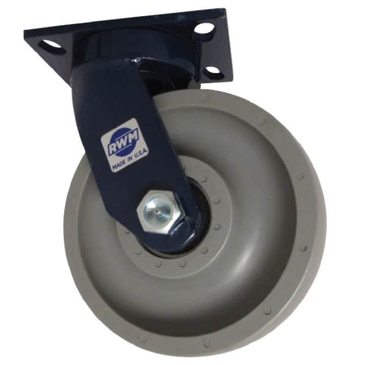
Over time, the “kingpin” has gotten a reputation as the primary point of failure in industrial material handling. A central bolt and nut are essential to hold the swivel assembly together in traditional casters. However, that bolt eventually bends, wears down, or shears under the stress of high-speed towing or heavy shock loads. This either causes the caster to freeze or the rig to completely collapse.
A solution that removes vulnerability is probably what you are looking for when sourcing components for a high-intensity commercial environment. The solution you crave has a name: the kingpinless design.
These innovative casters distribute load over a large surface area by using a precision-machined raceway that does a good job of locking the top plate and yoke together. Interestingly, it does this without a central bolt. In the end, you get a stronger, smoother, and significantly more durable swivel.
Knowing where to source the best casters for industrial use can be tricky, as more vendors and manufacturers have penetrated the market with too-good-to-be-true offerings.
Rest assured, this guide will help put you on the path of finding high-performance kingpinless casters for commercial use, starting with the original innovators.
1. Primary Source: RWM Casters and the Original Kingpinless Casters
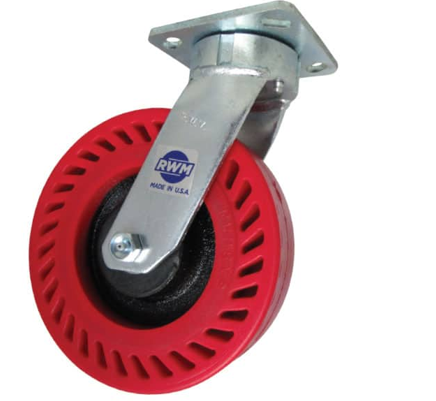
All roads lead back to RWM Casters when searching for the definitive source of this technology. This brand is not just a supplier or vendor; they originally invented the kingpinless design. In a sense, they revolutionized the industry, paving the way for other brands to thrive.
So, if you offer rigorous towing services or perform operations with extreme weight capacities, you want to get your tools from the innovators. Directly sourcing from the original inventors means you are getting the best there is, something others try to replicate.
Different Caster Capacity for Different Tasks
The intensity of the task determines the selection of Kingpinless Casters you will choose at RWM. For instance, the 65 Series is the benchmark in the industry’s standard pick for heavy-duty use. It comes with 3/8″ carbon steel ball bearings and a 2-3/8″ diameter raceway.
However, you must bear in mind that the load requirements will increase as the engineering scales up. For example, their 125 Series offers a whopping 40,000 lbs capacity per caster for massive aerospace or automotive assemblies.
Highly Customizable
Being able to customize your purchase or tool is one of the biggest advantages of getting your caster from the original makers. RWM gives clients the technical depth or edge that online retailers cannot match. From specialized finishes like zinc plating or “Electroless Nickel” for corrosive environments to specific leads to reduce swiveling effort, you can get all you need in one place. They also offer an extensive range of wheel materials, including high-capacity phenolic wheels and the floor-protective signature premium proteus.
2. Specialized Heavy-Duty Industrial Distributors
The original manufacturers aren’t the only reputable dealers in the industry. Other specialized industrial distributors are also crucial for commercial buyers. They stock a massive inventory of these high-grade casters for instant shipping. These companies have in-house technical sales engineers with an unparalleled understanding of “side thrust” and “impact loading,” unlike generic hardware stores.
When you need a hybrid rig, such as a mix of kingpinless casters with other specific braking systems like swivel locks, these distributors can be a lifesaver. They can also help provide 3D renderings of the caster assemblies, which allows your design unit to easily integrate them into your existing framework before the physical units arrive.
See also: Wire Wrapping Jewelry: A Complete Guide to Art, Techniques, and Business Potential
3. Automotive and Aerospace Logistics Providers
The need for high-speed towing usually dictates where you source tools from, especially in the automotive and aerospace industries. When you tow traditional kingpin casters behind a tugger at 5 to 10 mph, it often flutters. For kingpinless casters specially made for “constant swivel” applications, logistics providers specializing in tow-train systems are the ideal source.
Most of these suppliers recommend the 4-1/2″ diameter raceway-utilizing RWM 85 Series. The ability to provide the stability it requires to prevent caster oscillation at high speeds makes this larger raceway crucial. Usually, you aim for ergonomic casters that facilitate the movement of massive jet engines or car chassis when you source high-grade kingpinless casters through these mediums.
4. Custom Fabrication and Material Handling Consultants
Sometimes your source is a consultancy that helps you build the complete cart or rack framework. These fabricators highly depend on kingpinless casters. So, make sure you specify the use of RWM kingpinless sections if you are building heavy-duty movers or making custom “A-frame” carts.
Consultants often prefer these because they are “maintenance-free.” While conventional casters require a periodically tightened central nut due to frequent swivel wear down, a kingpinless section maintains its tolerance throughout the product’s lifespan.
When you work with a fabricator who utilizes these components, you protect your material handling system’s most expensive part: your workers’ labor. This approach can guarantee zero equipment failure during a critical move.
Choosing the Right Source
Consulting the original makers, RWM Casters, is the starting point of your search for the best kingpinless casters for commercial use. From there, you may look at specialized distributors and industry-specific suppliers.
The kingpinless design remains the industry standard for your goals. Whether you struggle with the high-speed demands of an airport tarmac or the sanitary requirements of a lab, you can hardly put a foot wrong when you go kingpinless.
Ditching the kingpin is more than just buying a wheel. Replacing it with the high-performing kingpinless caster is an investment in a swivel section designed to outlive the cart it supports.