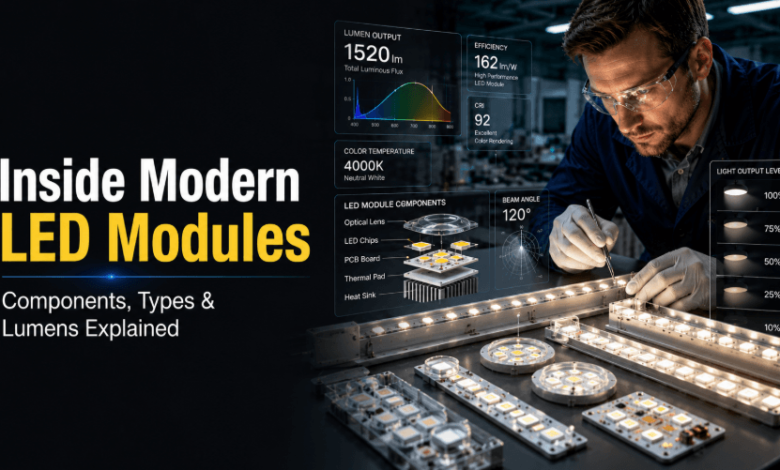
LED modules have become a popular choice for modern lighting systems because they offer energy efficiency, flexibility, and long-lasting performance. From commercial buildings and retail displays to industrial applications and outdoor lighting, LED modules provide a practical way to create reliable and customized lighting solutions.
However, choosing the right LED module requires a basic understanding of how these systems work. Knowing the main components, available types, and the role of lumens can help businesses, designers, and manufacturers select lighting solutions that match their specific needs. A better understanding of these basics also makes it easier to compare products and choose modules that deliver reliable performance over the long term.
What Is an LED Module?
An LED module is a complete lighting unit that contains multiple components designed to produce and control light output. Unlike traditional bulbs, LED modules are often integrated into lighting fixtures, signs, displays, and specialized equipment.
They are built to provide consistent illumination while offering advantages such as lower energy consumption, longer lifespan, and easier customization. Depending on the application, LED modules can be designed with different sizes, shapes, brightness levels, and optical characteristics.
Understanding the structure of an LED module is the first step toward selecting the right solution because every component contributes to the module’s overall efficiency, durability, and lighting quality.
Main Components of an LED Module
Every LED module consists of several important parts that work together to deliver efficient and reliable lighting performance. The quality of each component directly affects brightness, durability, and overall efficiency.
The Main Components of an LED Module usually include:
LED Chips
LED chips are the primary light-producing elements of the module. Their efficiency, color quality, and performance determine the overall lighting output. High-quality chips provide better brightness, improved consistency, and longer operating life.
Circuit Board
The circuit board connects and supports the LED chips while controlling electrical flow. Many LED modules use specially designed PCBs that help improve heat management and maintain stable performance.
Heat Dissipation Structure
Heat control is essential because excessive temperatures can reduce LED lifespan. Heat sinks, thermal materials, and proper structural designs help move heat away from sensitive components, allowing the module to operate more efficiently for longer periods.
Optical Components
Optical parts such as lenses and diffusers control how light is distributed. They help improve beam direction, reduce glare, and create more uniform illumination, making lighting more comfortable and effective.
Driver and Electrical Components
Drivers regulate the power supplied to the LED module. A reliable driver helps maintain stable operation, protects the LEDs from electrical issues, and supports consistent brightness throughout the product’s lifetime.
Different Types of LED Modules
LED technology has developed to meet the needs of different industries and applications. Understanding common LED modules types can make it easier to choose the right lighting solution.
Rigid LED Modules
Rigid LED modules are built on solid circuit boards and are commonly used in applications where durability and stable installation are important. They are often found in commercial lighting fixtures, signs, and industrial equipment.
Flexible LED Modules
Flexible modules can be bent or adjusted to fit unique designs and spaces. They are useful for decorative lighting, curved surfaces, furniture lighting, and creative architectural projects.
High-Power LED Modules
High-power modules are designed for applications that require strong illumination. They are commonly used in outdoor lighting, industrial environments, warehouses, and high-ceiling areas where greater brightness is needed.
Customized LED Modules
Some projects require specific sizes, brightness levels, colors, or performance features. Customized modules allow manufacturers to create solutions based on unique design and application requirements instead of relying on standard products.
Understanding LED Lumens
When selecting an LED module, brightness is often one of the most important factors to consider. This is where LED lumens become important.
Lumens measure the total amount of visible light produced by an LED source. Unlike watts, which measure energy consumption, lumens show how much light a product actually produces.
A higher lumen rating generally means a brighter light output. However, brightness alone does not determine whether a module is suitable. Factors such as beam angle, mounting height, application area, and lighting purpose also influence the final result.
For example, a retail display may need focused and high-quality illumination to highlight products, while a warehouse may require broad and powerful lighting coverage for safe working conditions.
See also: Face Mask LED Light: Understanding the Technology Behind Modern Skincare
How to Calculate the Required Light Output
Choosing the correct lumen level requires understanding the relationship between LED output, efficiency, and the size of the lighting area.
The Formula for calculating luminaire lumens helps designers estimate the required light output by considering factors such as LED efficiency, fixture performance, and lighting requirements.
This calculation is useful because it prevents over-lighting or under-lighting a space. A properly planned lighting system improves visibility, creates a more comfortable environment, and avoids unnecessary energy consumption.
Factors That Affect LED Module Performance
Several elements influence how well an LED module performs over time.
Energy Efficiency
Efficient modules produce more light while using less electricity. This helps reduce operating costs and supports sustainable lighting designs.
Thermal Management
Proper heat control protects LED components and improves reliability. Good thermal design allows modules to maintain stable brightness and consistent performance throughout their lifespan.
Optical Design
Well-designed optics ensure that light reaches the intended area effectively. This improves visual comfort, reduces wasted light, and creates more uniform illumination.
Quality of Manufacturing
Reliable manufacturing processes, material selection, and testing procedures all contribute to consistent LED performance. Careful quality control also helps ensure that every module meets the required technical standards before installation.
Choosing the Right LED Module for Your Project
The best LED module depends on the specific requirements of the application. Before selecting a product, consider:
- Required brightness level
- Installation environment
- Energy efficiency goals
- Size and design limitations
- Color quality requirements
- Expected operating hours
It is also important to think about future maintenance, environmental conditions, and compatibility with the overall lighting system. Choosing the right module at the beginning can reduce maintenance costs and improve long-term performance.
Working with an experienced LED module manufacturer can help ensure the selected solution meets specific technical and performance needs. Higntek (Shenzhen) Co., Limited is an engineering-driven LED lighting module manufacturer focused on developing reliable solutions for demanding applications. With research and development at the core, Higntek designs LED modules that support requirements such as high luminous efficacy, excellent color rendering, full-spectrum lighting, and long service life.
Final Thoughts
LED modules are more than simple light sources. Their performance depends on the quality of individual components, the type of module selected, and the correct understanding of lumen output.
By learning about module structures, different designs, brightness calculations, and the factors that affect long-term performance, businesses and designers can make more informed lighting decisions. Whether the goal is improving energy efficiency, creating customized lighting systems, or achieving better visual performance, understanding LED module technology is essential for building reliable and efficient modern lighting projects.